
“Please send a certified copy of your ID.” This line sits at the bottom of countless onboarding emails. For decades, collecting that stamped piece of paper was the gold standard for verifying a new hire, but today it is a massive operational liability. Relying on a static PDF or a photocopied ID in 2026 leaves businesses completely exposed. These documents are easily manipulated, perfectly forged, and inherently unsecure. To truly protect the payroll and meet strict data privacy laws, businesses must abandon the paper trail entirely. This is why biometric background checks have become the non-negotiable standard in hiring.

The rise of the ghost employee syndicate
Identity fraud has moved far past a desperate candidate tweaking their CV to bump up a starting salary. Today, South African businesses face highly organised syndicates actively infiltrating payroll systems to create ‘ghost employees’. Recent government audits uncovered over 4,300 high-risk ghost employees sitting on state payrolls.
This specific type of fraud is almost always an inside job. A corrupt employee in HR or payroll creates a fictitious profile on the system and routes a monthly salary into a syndicate-controlled bank account. To ensure they pass routine audits, the fraudster slips a forged, supposedly certified, PDF of an ID into the employee file. If questions are ever asked, they simply point to the fake document as proof.
A visual inspection of an ID book or smart card fails because a certified stamp can be forged just as easily as the document itself. When HR teams rely on these easily manipulated PDFs instead of secure biometric background checks, they provide internal fraudsters with the exact cover they need.
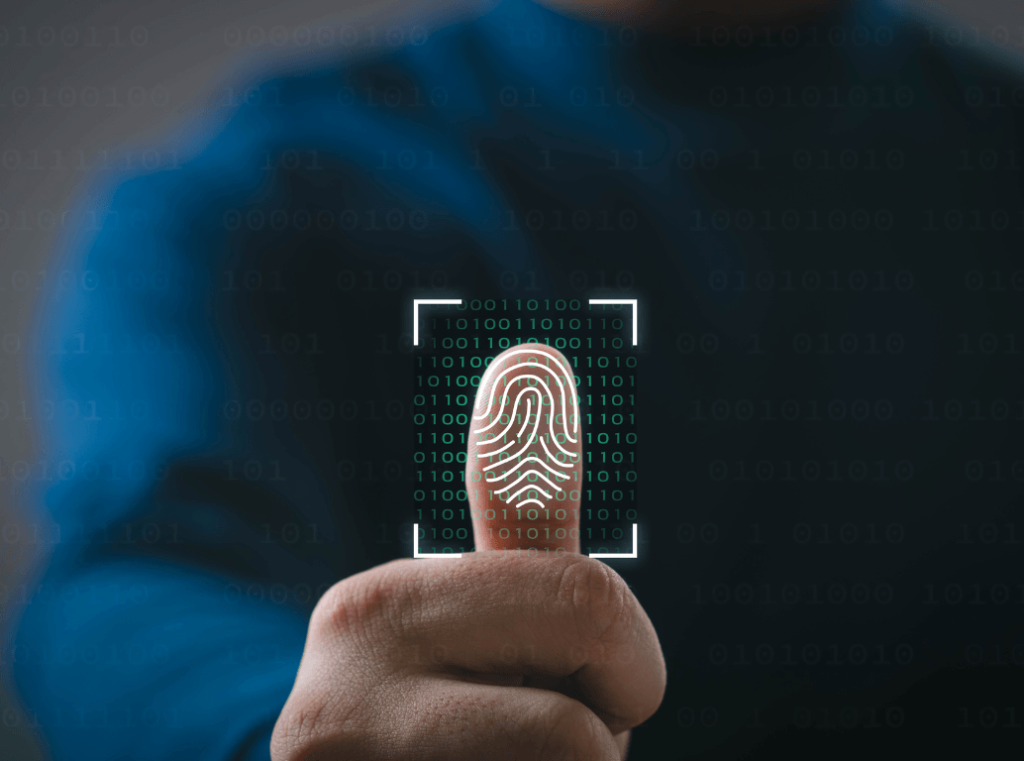
Mandating a physical fingerprint scan and live selfie to activate a new hire dismantles this scheme. A corrupt administrative clerk cannot scan a PDF. Enforcing the capture of live, verified data eliminates the administrative loopholes syndicates rely on.

The POPIA compliance risk sitting in the HR inbox
Most businesses picture a data breach as a sophisticated cyberattack on corporate firewalls. In reality, the most immediate threat often sits completely unnoticed: a shared HR email folder or an unencrypted local drive overflowing with candidate identity documents.
Every time a recruitment team requests a traditional paper trail (passports, proofs of address, and ID scans), that highly sensitive personal information enters the company’s ecosystem. It usually stays there, completely unmanaged and unprotected. Under the Protection of Personal Information Act (POPIA), indefinitely hoarding candidate files without strict encryption and access controls is a definitive compliance failure. If an internal server is compromised, the company becomes entirely liable for the exposed identities, facing severe regulatory fines and reputational damage.
The most effective way to secure candidate data is to stop collecting static files altogether. Implementing biometric background checks removes the administrative burden of storing sensitive identity documents. The necessary information is captured, instantly verified against the national database, and processed securely, without ever downloading a high-risk file to corporate servers.
Learn more about how to run POPIA-compliant background checks
How DotsTouch executes biometric background checks without a paper trail
DotsTouch replaces vulnerable HR administration with forensic certainty. Integrating this app-based solution directly into the recruitment workflow equips teams to process high-level verifications securely, capturing hard data right at the source.
Our platform provides the technology required to execute foolproof biometric background checks and protect commercial interests:
- Biometric fingerprint capture: Advanced scanner devices instantly record candidate fingerprints, eliminating physical ink, paper records, and the reliance on easily forged certified PDFs.
- Visual authentication: The DotsTouch app allows teams to capture a live candidate selfie alongside their fingerprint. This binds the biometric data to a verified face, proving the person standing in the room exactly matches the submitted profile.
- Centralised security: Criminal checks run completely within the secure DotsTouch ecosystem. Securing this data away from standard email chains and unencrypted local drives eliminates the risk of internal data leaks.
The verification becomes a closed-loop process. The system captures, authenticates, and processes candidate identity without ever generating a risky paper trail.

Replacing outdated stamps with secure technology
Top-tier professionals expect operational efficiency. Forcing a new hire to spend an afternoon queuing at a local police station to secure a commissioner of oaths stamp introduces immediate administrative friction. It damages employer branding before the individual even completes onboarding.
Modern recruitment requires a frictionless alternative. The DotsTouch app provides exactly that, allowing administrators to manage the verification process smoothly, complete with seamless Auth2.0 login through Microsoft AD or Google Mail.
For high-calibre talent, encountering seamless biometric background checks instead of physical paperwork signals that they are joining a secure, forward-thinking organisation. The digital process respects the candidate’s time while simultaneously locking down the business’s commercial interests.
Moving to digital verifications is a strategic security imperative. Stop leaving corporate payrolls vulnerable to forged PDFs. Get started with Dots360 to integrate DotsTouch into your onboarding workflow today, and follow Dots Africa on Facebook and LinkedIn for expert insights on mitigating recruitment risk.